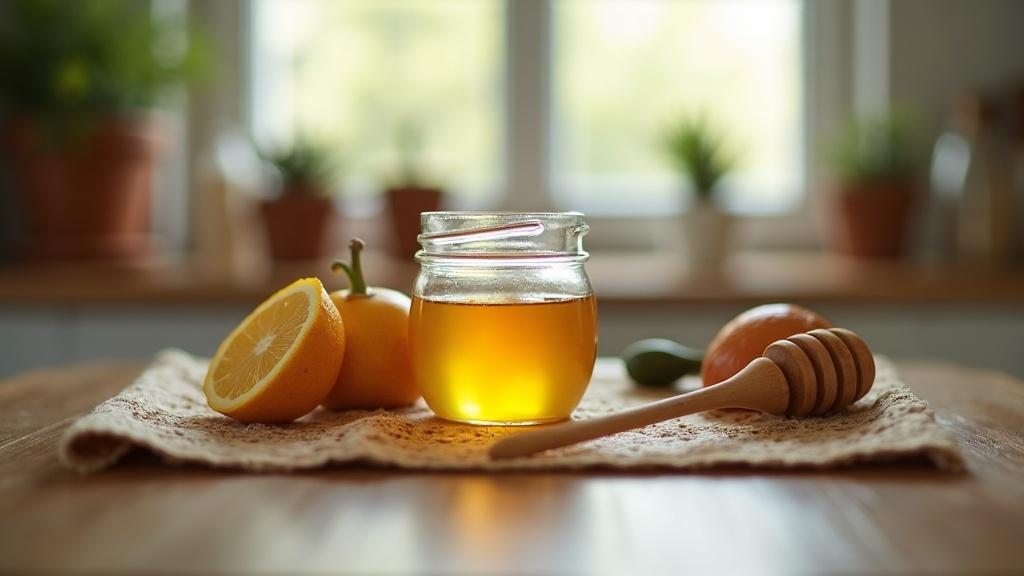
Long before modern cognition research existed, honey held a quiet place in evening rituals across the Mediterranean. This page looks at that tradition and what curiosity about memory after 50 looks like today.
Cognitive changes after midlife are common and widely studied. Here are four factors researchers and clinicians often point to.
Routines that once demanded constant recall — phone numbers, directions, schedules — are now handled by devices, which can shift how often certain mental muscles get exercised.
Sleep architecture naturally changes with age, and sleep quality is frequently discussed in relation to how the brain consolidates information overnight.
Evening customs — including the Mediterranean habit of a warm drink with a spoonful of honey before bed — have largely disappeared from modern routines, along with the slower pace they once encouraged.
Constant notifications and multitasking are often cited as reasons focus feels harder to sustain than it did decades ago.
Public conversation about memory and aging is full of oversimplified claims. Here is a sober comparison of some common statements.
Forgetting things occasionally after 50 means something is seriously wrong.
Occasional forgetfulness is common with age and is not, by itself, a diagnosis of any condition. Persistent concerns should always be discussed with a healthcare professional.
There is a single food or ritual that reverses cognitive aging.
No single food, drink, or ritual has been shown to reverse cognitive aging. Traditions like a nightly honey drink were part of broader lifestyle patterns, not standalone solutions.
Mental decline is entirely unavoidable and identical for everyone.
Cognitive aging varies widely between individuals and is influenced by many factors, including genetics, health conditions, and daily habits — not a fixed, universal timeline.
The video referenced on this page walks through a three-part framework built around traditional evening habits. Here is a general outline.
The first part looks at why many Mediterranean households built a slower, quieter routine into the hours before sleep.
The second part discusses the role of small, repeated evening habits — including the use of honey in a warm drink — as part of a broader wind-down routine.
The third part covers the idea of paying attention to personal patterns over weeks, not expecting immediate or dramatic shifts.
In parts of Greece, southern Italy, and coastal Spain, honey has been harvested and stored for generations, often passed down as part of household tradition rather than formal medicine. Evening routines in these regions frequently included a warm drink sweetened with honey, taken slowly, away from bright light and noise — a contrast to the fast-paced evenings common in much of the modern world today.
Researchers who study Mediterranean lifestyle patterns often note that it is the combination of habits — diet, pace, social connection, and rest — that draws attention, rather than any single ingredient on its own.
Frequently forgetting conversations that happened just hours earlier is worth noting and discussing with a doctor if it becomes a pattern.
Occasional misplaced keys are normal; a sharp increase in frequency may be worth mentioning at a checkup.
Struggling to follow a recipe or a set of directions that once felt simple can be a sign worth tracking over time.
Occasionally searching for a word is common; a noticeable increase deserves attention rather than dismissal.
Avoiding social gatherings or hobbies due to memory concerns is a pattern many clinicians recommend discussing early.
Ongoing trouble falling or staying asleep is frequently mentioned alongside conversations about memory and cognition.
These testimonials reflect individual opinions and experiences. They are not a guarantee of any outcome, and individual results vary.
This page provides educational context and directs interested visitors to a video presentation. Any related offer is disclosed separately on the following page.
No specific claim is made here about honey improving memory. This page discusses a historical and cultural ritual, not a clinical treatment.
Not necessarily. Mild changes are common with age, but persistent or worsening symptoms should always be evaluated by a healthcare professional.
It refers to a traditional practice in parts of Greece, Italy, and Spain involving a warm drink, often sweetened with honey, consumed slowly in the evening as part of a broader wind-down routine.
The presentation is a short video. Exact length is shown once you click through to watch it.
This content is intended for adults over 50 who are curious about lifestyle traditions related to memory and daily routines, for general educational purposes.
No. Nothing on this page should be used to start, stop, or change any medical treatment. Always consult a healthcare professional first.
Watch the short presentation that walks through the Mediterranean evening habit discussed on this page, including the historical context and the framework built around it.
Advertising Disclosure: This page is sponsored content and may contain affiliate links. If you click through and make a purchase, the owner of this site may receive compensation. This content is provided for informational and promotional purposes and should be viewed as an advertisement.
Content Disclaimer: The information provided on this page is for educational purposes only and has not been evaluated by the Food and Drug Administration. It is not intended to diagnose, treat, cure, or prevent any disease or condition. Always consult a qualified healthcare professional before making any changes to your health routine, diet, or lifestyle.
Results Disclaimer: Individual results vary. Any testimonials or experiences shared on this page are personal opinions and are not a guarantee of similar outcomes for any other individual.
© 2026 · All Rights Reserved · /contact/